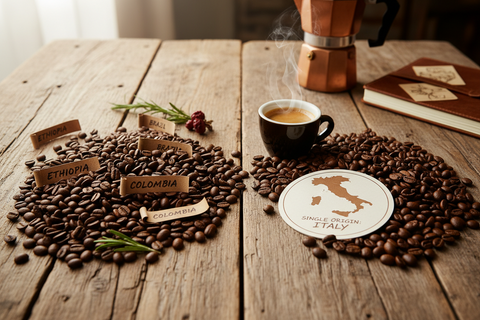
The same green coffee, roasted in different ways, can become a delicate and floral drink or an intense and chocolatey one. Roasting is the stage that transforms the raw bean into the coffee we know, and it is one of the keys to the taste in the cup. Let's look at what happens during roasting and how to find your way among light, medium and dark roasts.
What happens during roasting
Roasting is the cooking of green coffee beans at high temperatures (generally between 180 and 240 °C). Profound transformations take place during the process:
- The bean loses moisture and increases in volume, becoming brittle.
- The sugars caramelise and hundreds of aromatic compounds develop (the so-called Maillard reaction).
- The colour shifts from green to hazelnut, all the way to dark brown.
- The oils rise to the surface, especially in the more intense roasts.
The roaster controls time and temperature to "draw out" the desired aromatic profile: it is a genuine artisan craft.
The roast levels
Light roast
Light hazelnut colour, dry surface. It brings out acidity and the more delicate, floral and fruity aromas, typical of fine Arabicas. The body is light and the perceived caffeine stays high. It is the roast loved in filter coffee and in the Northern European tradition.
Medium roast
Balanced brown colour. It is the meeting point between acidity, sweetness and body: notes of dried fruit, chocolate and caramel, with a rounded finish. It is highly versatile and works well with both espresso and the moka pot.
Dark roast
Intense brown colour, oily surface. Body dominates, with notes of cocoa and roasted character and a pleasant bitter touch; acidity is almost absent. It is the roast of the Italian espresso tradition, especially in the South, where people look for full, intense cups with a thick crema.
Roasting and caffeine: a myth busted
Contrary to popular belief, a darker roast does not mean more caffeine. On the contrary: caffeine is fairly stable under heat, while the bean loses weight during roasting. Weight for weight, a light-roast coffee can contain slightly more caffeine. What really makes the difference, if anything, is the blend: Robusta contains far more of it than Arabica.
Which roast to choose
There is no single "best" roast in absolute terms: it depends on your taste and your brewing method.
- Do you love delicate, fresh and acidic aromas? Go for light or medium roasts, perhaps as whole beans to grind fresh.
- Are you after an intense, full-bodied and creamy espresso? A medium-dark or dark roast is your path.
- Do you prefer a balanced cup for everyday drinking? The medium roast is the most versatile choice.
In capsules and pods, the roast level is already calibrated by the roastery: reading the tasting notes on the label ("delicate", "intense", "strong") helps you understand what to expect in the cup.
In conclusion
Roasting is the art that gives coffee its character: light for the aromas, dark for the body, medium for balance. Knowing it helps you choose the right blend and better appreciate every cup. In our catalogue you will find blends with the most varied roasts, in beans, pods and capsules: let your taste guide you and find the perfect profile for you.