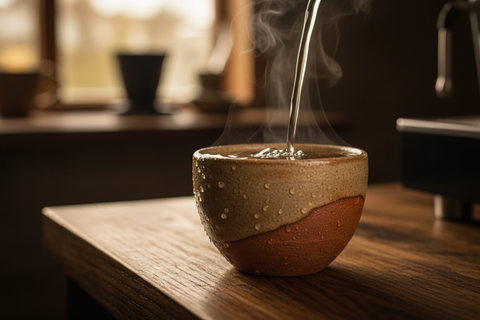
The espresso crema is the calling card of a well-made cup: that hazelnut-coloured veil, thick and silky, that crowns freshly extracted coffee. But what exactly is it, what does it depend on, and why is it sometimes perfect and sometimes almost absent? In this guide we uncover all the secrets of crema, so you can recognise a good espresso and produce one at home too.
What espresso crema is
Crema is an emulsion of water, coffee oils and thousands of tiny carbon dioxide bubbles. During extraction, hot water forced through at high pressure passes through the ground coffee and carries with it the aromatic fats and the gases naturally present in the roasted beans. The result is that dense, compact foam floating on the surface.
Crema is not just about looks: it traps the most volatile aromas and releases them slowly, prolonging the pleasure of tasting. This is why an espresso "without crema" loses its fragrance far more quickly.
What a good crema depends on
Several factors, working together, determine the quantity, colour and longevity of the crema.
The blend: Arabica and Robusta
Robusta naturally produces more crema, thicker and more persistent, because it is richer in oils and caffeine; it tends towards a dark hazelnut colour. Arabica gives a thinner crema but with finer, sweeter aromas. Italian-style blends balance the two species precisely in order to combine body, crema and fragrance.
Freshness and roasting
Freshly roasted, well-kept coffee contains more CO₂: it is this gas that generates the crema. Old or poorly stored coffee "degasses" and produces a scant crema that fades at once. The roast matters too: a medium-dark roast, typical of espresso, encourages a full-bodied crema.
Pressure and temperature
A true espresso is born at around 9 bar of pressure with water at roughly 88-92 °C. It is the combination of pressure and heat that emulsifies the oils. This is why espresso machines, whether capsule or pod, produce a crema that the moka pot, working at far lower pressure, simply cannot deliver.
How to recognise a quality crema
A successful espresso shows a few unmistakable signs:
- Hazelnut colour with darker shades, sometimes "tiger-striped" markings.
- A thickness of 2-3 mm, even across the whole surface.
- Persistence: if you stir with the spoon, the crema closes back up within a few seconds.
- Sugar hold: a pinch of sugar rests on the surface for a moment before sinking.
A pale, thin crema often points to an extraction that is too fast or coffee that is not fresh; a dark crema "punctured" in the centre can signal an over-long extraction or water that is too hot.
The tricks for a perfect crema at home
With single-serve systems a good crema is easy to achieve, but a few small touches make all the difference:
- Choose fresh capsules and pods and keep them somewhere cool and dry, away from light and humidity.
- Pre-warm the cup: a cold cup cools the extraction and breaks up the crema. Let it warm on the machine's cup tray or rinse it with hot water.
- Run a little water through empty before the coffee, so the group head is at the right temperature.
- Respect the length of the espresso: 25-30 ml in the cup is ideal. Stretching it too far "waters it down" and ruins the crema.
- Clean the machine regularly: residue and limescale spoil both extraction and crema.
If you love a particularly thick crema, lean towards blends with a good proportion of Robusta or "strong", creamy blends; if you prefer more delicate aromas, go for predominantly Arabica blends, accepting a slightly lighter but more fragrant crema.
In conclusion
The crema tells the whole story of your espresso: the blend, the freshness, the machine and even the way you prepare it. Knowing the factors that influence it lets you choose your coffee better and bring a bar-worthy espresso to the cup every day. In our catalogue you will find pods and capsules from many Italian roasters: experiment, compare the cremas and discover the blend that is right for you.